
Many of Japan’s most notable crafts achieved global recognition after they were ensconced in the material lives of Japan’s elite. Craftspeople that serviced the noble and religious institutions of Japan came to be understood as part of nationally important craft institutions.
However, running parallel to the crafts that shape palaces and temples, has existed the crafts that shape daily life. Folk crafts, making of the people for the people, has always existed outside of institutional boundaries and irrevocably shapes the cultures and communities they are practiced in.
THE AINU PEOPLE
The Ainu community, some of the earliest settlers on the Japanese archipelago, have an ancient history. Originally a hunter-gatherer people, the Ainu people’s subsistence lifestyle has always been deeply enmeshed with their craft activities. For centuries, Ainu communities have created objects that balance banality with beauty. Commonplace objects, created for use in daily life, are decorated with symbols and patterning that express the Ainu belief system and their unique folk-art style.
Beginning in the 9th century, the Ainu people came under Japanese subjugation and were pushed north, then exclusively populating Hokkaido and surrounding regions. For centuries, as the Ainu culture, language, and crafts thrived, the people’s lives remained shaped by outsider incursions on their land.
Following the political struggles between the Ainu people and the Japanese government throughout the Meiji Restoration, the Ainu emerged in the 20th century with a determination to preserve and promote the unique Ainu culture.
It is against this historic backdrop that a significant figure emerged. Nibutani Works was established in 2022, striving to empower Ainu craftspeople and their practices. With a multi-faceted mission, Nibutani Works creates a platform for Ainu crafts whilst creating sustainable jobs for young Ainu artisans. The pieces focus on incorporating traditional Ainu aesthetics, revitalized for contemporary lifestyles and preferences.

A LEGACY OF ADVOCACY
Kayano Kimihiro, founder of Nibutani Works, is not the first in his family to work tirelessly to preserve Ainu culture. His grandfather, Kayano Shigeru, was a politician and leading figure in gaining governmental recognition of indigenous Ainu rights. A man of many firsts, the elder Kayano-san was the first Ainu representative elected to the Japanese Diet and the founder of 15 Ainu language schools, in addition to founding the Nibutani Ainu Culture Museum.
This understanding of the deep importance of language, story, and craft practice was passed from grandfather to grandson. Nibutani works continues to honor Kayano-san’s legacy and continues to cultivate a wide and far-reaching audience to appreciate this unique folk heritage.
NIBUTANI WORKS
“As we utilize traditional culture, we also believe it is our mission to deepen and spread a better understanding of Ainu culture” —Kayano-san, founder of Nibutani Works
Nibutani Works understands that it is not only important to preserve what has come before, but to empower a thriving, living practice to continue. They strive to create pieces that people enjoy, using daily objects that fit modern homes and routines, whilst simultaneously operating a production hub that balances conservation, education, and sustainable craft economies.
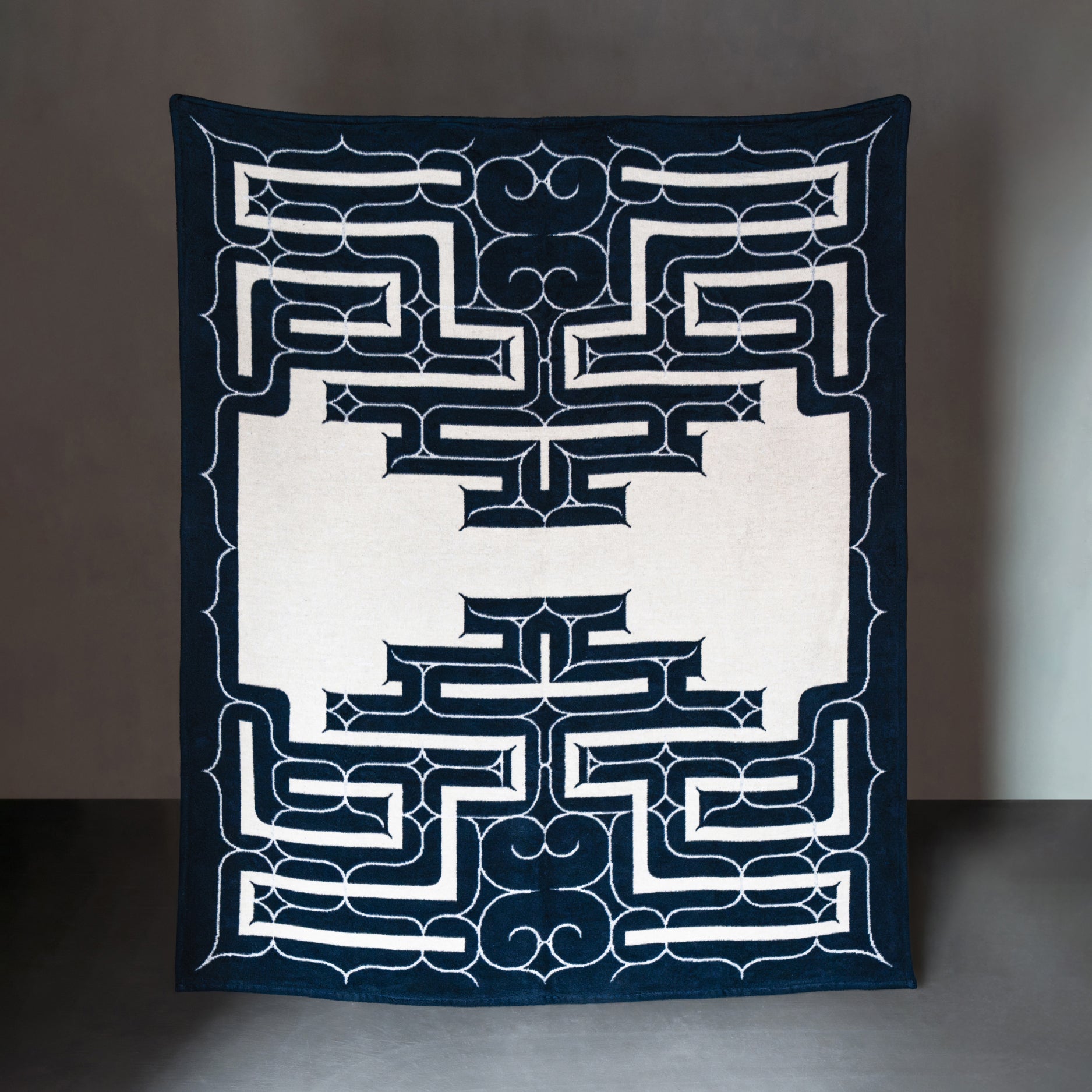
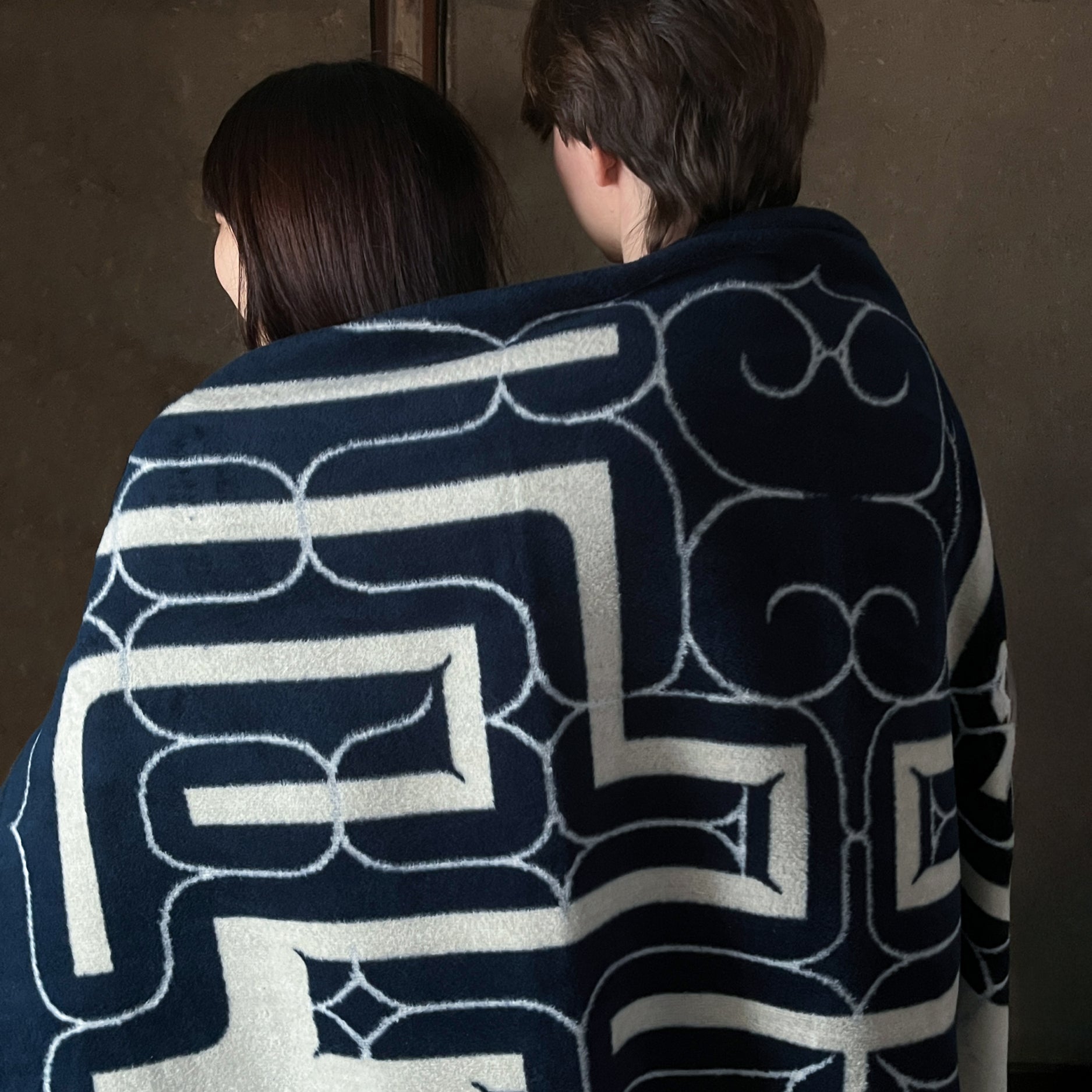
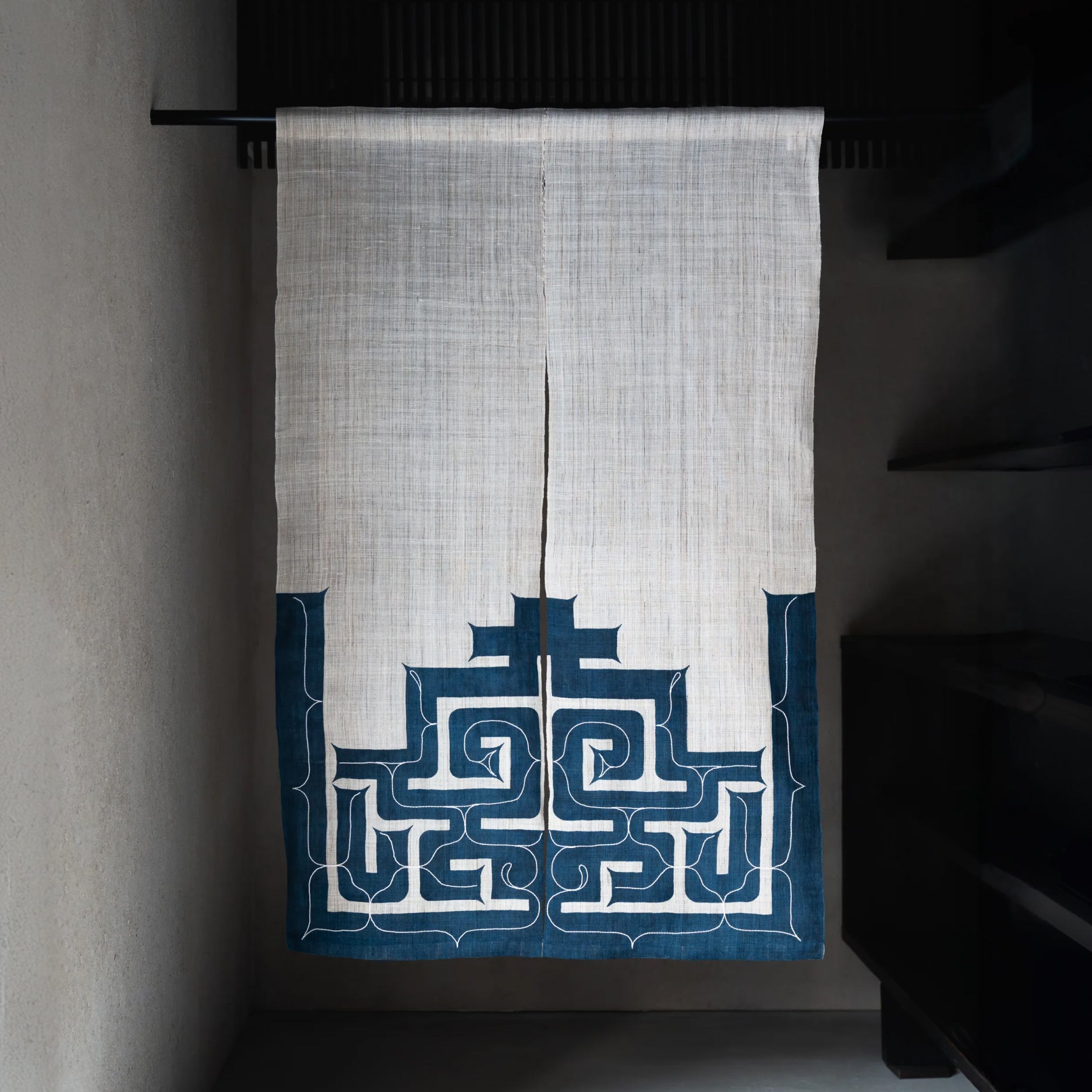
Together, with Nibutani Works and the designer Hase Yuka, POJ Studio is proud to present a collaborative collection: the Ainu Noren and the Ainu Blanket. Both pieces feature traditional motifs adapted to suit contemporary textiles. The noren is designed for doorways and wall decoration, and the blanket — generously sized to allow for bundling together with loved ones — translates geometric and symbolic patterns into a modern composition.
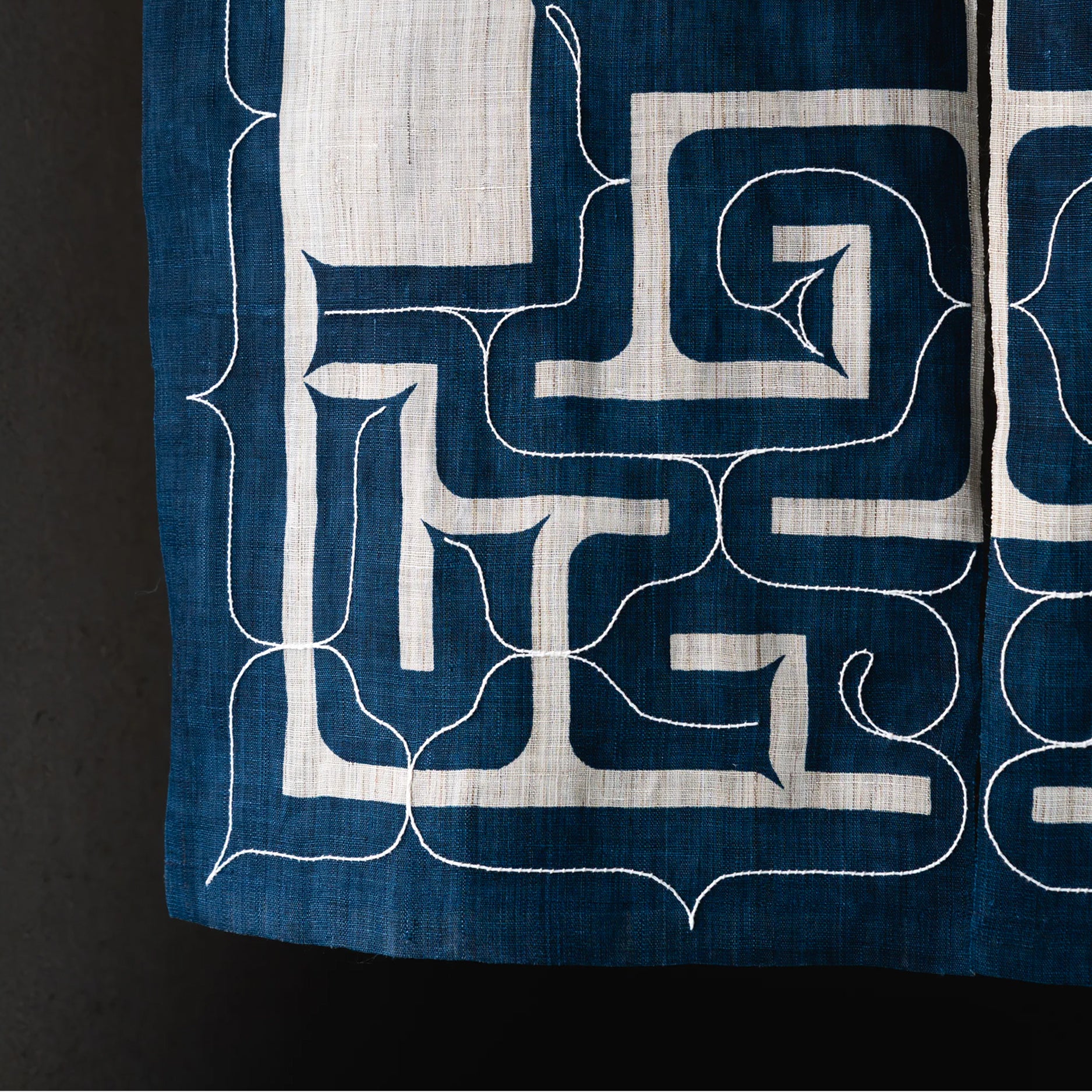
A deeply intentional act of collaboration, each noren within the collection is individually hand-stitched by Yamamoto Eiko, Kayano-san’s mother in law. She utilizes the traditional embroidery technique of ikarari. Continuing the traditional structures of the Ainu’s gendered labor organisation, Ainu women have always specialized in textile and embroidery-based craft practices. The continued practicing of ikarari embroidery by Yamamoto-san aligns with Nibutani Work’s mission of preserving the historic tradition while empowering the contemporary craftsperson individually.
POJ Studio is proud to partner with Nibutani Works and the Ainu community. By supporting the people and businesses empowering living craft, we wish to honor the labor and meaning behind each stitch and weave, support makers, and craft objects that preserve Ainu cultural and folk heritage.
POJ Studio endeavours to continually deepen its commitment to preserving the material heritage of Japan’s indigenous communities. By creating pieces designed for everyday use, working with producers who ensure fair craft wages, and by sharing the stories of each object, we hope to support the continued practice of Ainu craftspeople.