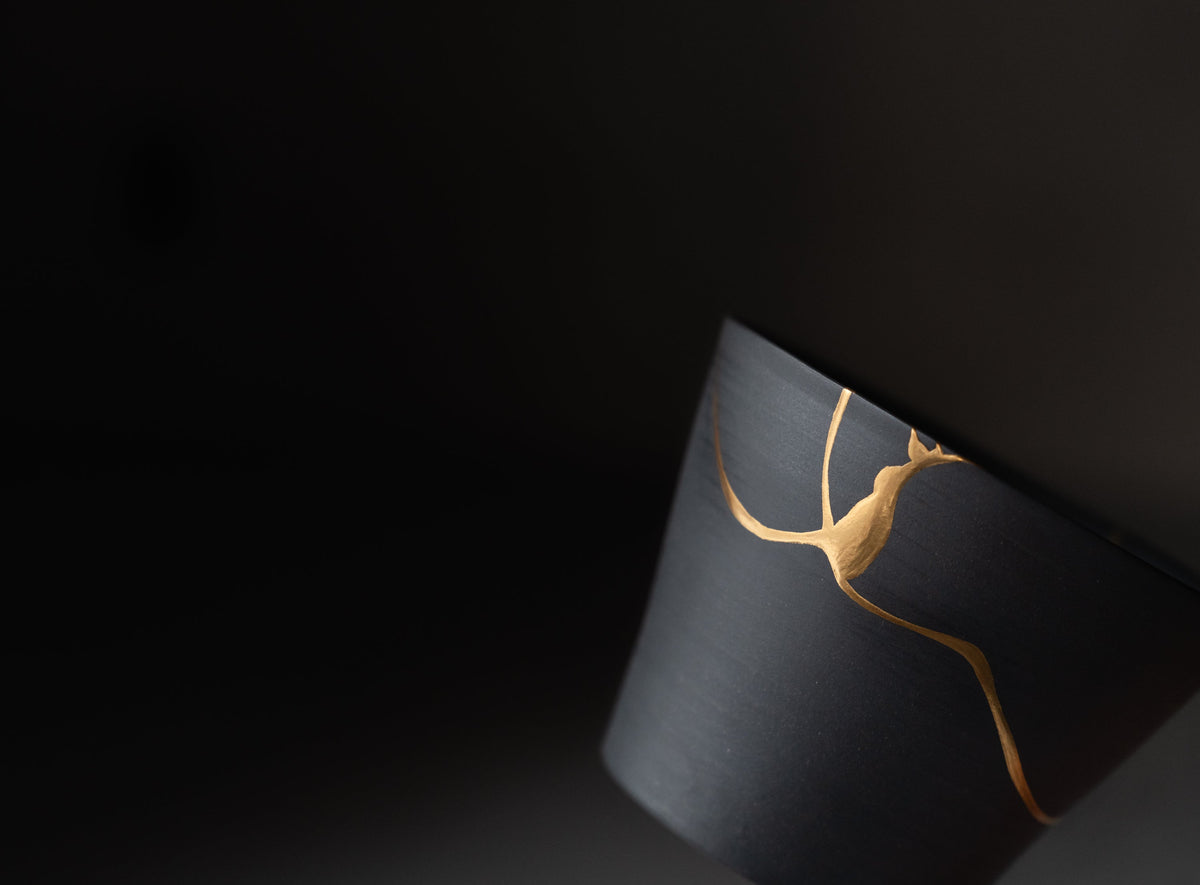
Following a period of careful restoration, your piece is ready to be enjoyed once again. Each stage of the repair has been carried out with patience and meticulous attention to detail, allowing the urushi and final finish to properly cure and settle.
The care you give your piece is an important part of preserving the repair and its beauty over time. We kindly recommend following the instructions below to help keep your piece in the best possible condition for years to come.

Care Instructions
Age for one month. Please place the ware in an enclosed environment to avoid accidental bump-ins, as well as exposure to direct sunlight and fluorescent lighting. Following the 1 month aging phase, your ware is ready to be used.

Do not use over direct heat. While kintsugi-repair is possible for stone, iron, and all other earthenware, it can no longer be used over direct heat.
Not microwave, oven, dishwasher safe. Even if the ware was microwave, oven, nor dishwasher-safe before, it is no longer. The metal finish and the urushi lacquer are best kept away from modern appliances.
Do not bleach, boil, scrub. Do not bleach, boil, or scrub with a hard brush or harsh cleaning agent to maintain the integrity of the metallic finish.
Do not scrape. Be quite careful when using cutlery around kintsugi lines as the metallic finish may scrape off.
Do not soak in water. Avoid soaking in water for long periods of time as this can loosen urushi that hasn't fully settled into its own. Cups and bowls can absolutely be used for liquid food and drink. We simply suggest that they are not soaked in the sink or used as a vase should the kintsugi-repair be located in an area of the vase that will be filled with water.
Wash by hand only. Please handle your repaired piece with care. Avoid scrubbing around the kintsugi lines, and do not use abrasive cleaners, hard sponges, or brushes, as they may affect the urushi lacquer and metallic finish. Gently rinse your piece and dry it with a soft cloth.
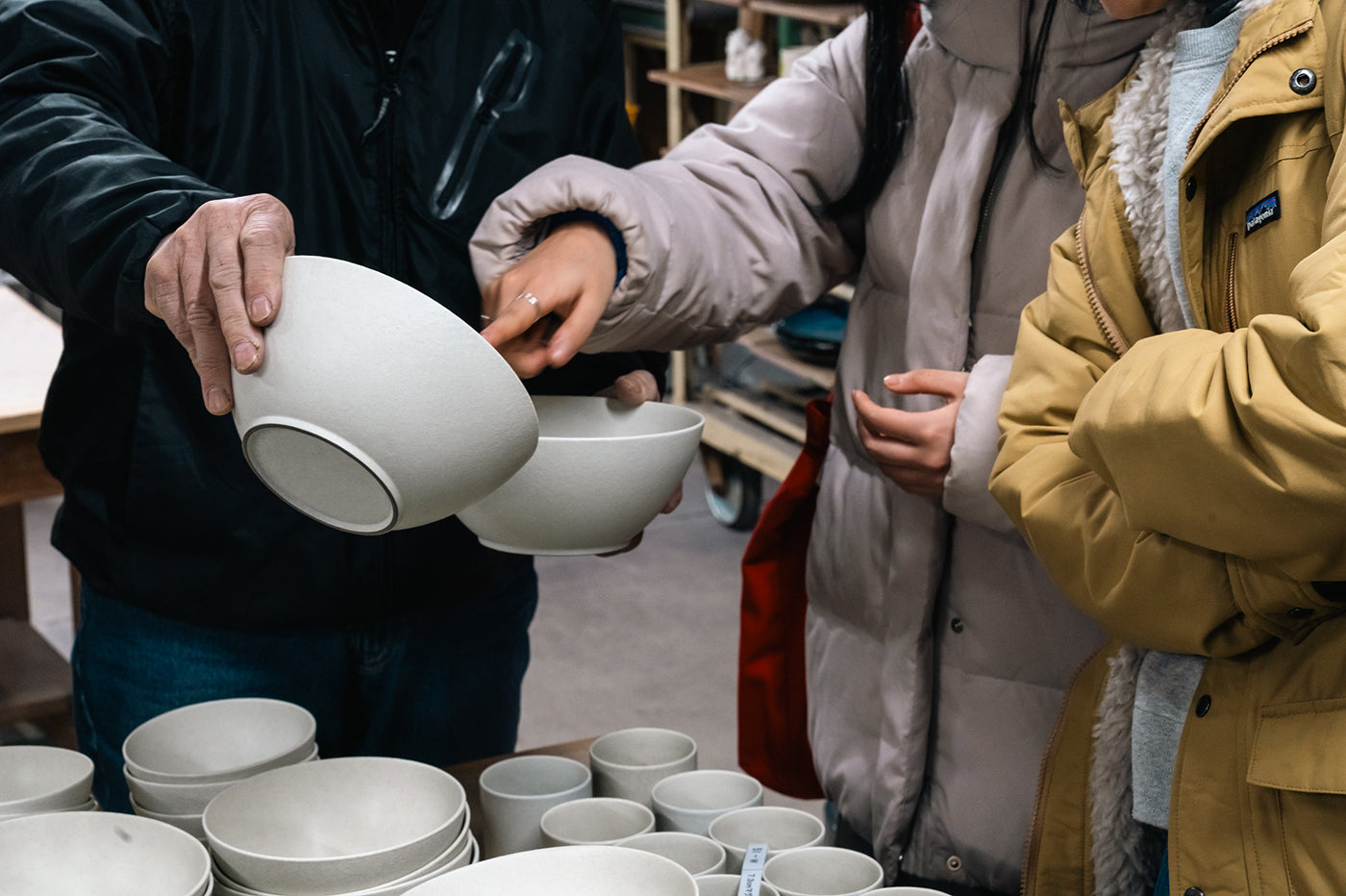
Avoid stacking with other ceramics. To protect the repaired areas, we recommend avoiding direct contact with other pieces when stacking. If necessary, place a sheet of soft paper between items.
Do not store in the refrigerator. Cold and dry environments may cause the ceramic and the repaired areas to shrink at different rates, which could affect the stability of the repair over time.
Avoid sudden temperature changes. Please avoid exposing your piece to sudden changes in temperature, such as pouring boiling water into a cold cup, as this may place stress on the ceramic and the repair.
Keep away from direct sunlight. Please keep your piece away from prolonged exposure to direct sunlight to help preserve the beauty of the urushi lacquer and the metallic finish.